COSTS
How much does product photography cost?
Most studios in the US charge $25 to $150 per finished image, or $1,000 to $3,000 per shooting day. Where you land inside that range depends less on your product than on how many images you order at once.
Last updated August 2026
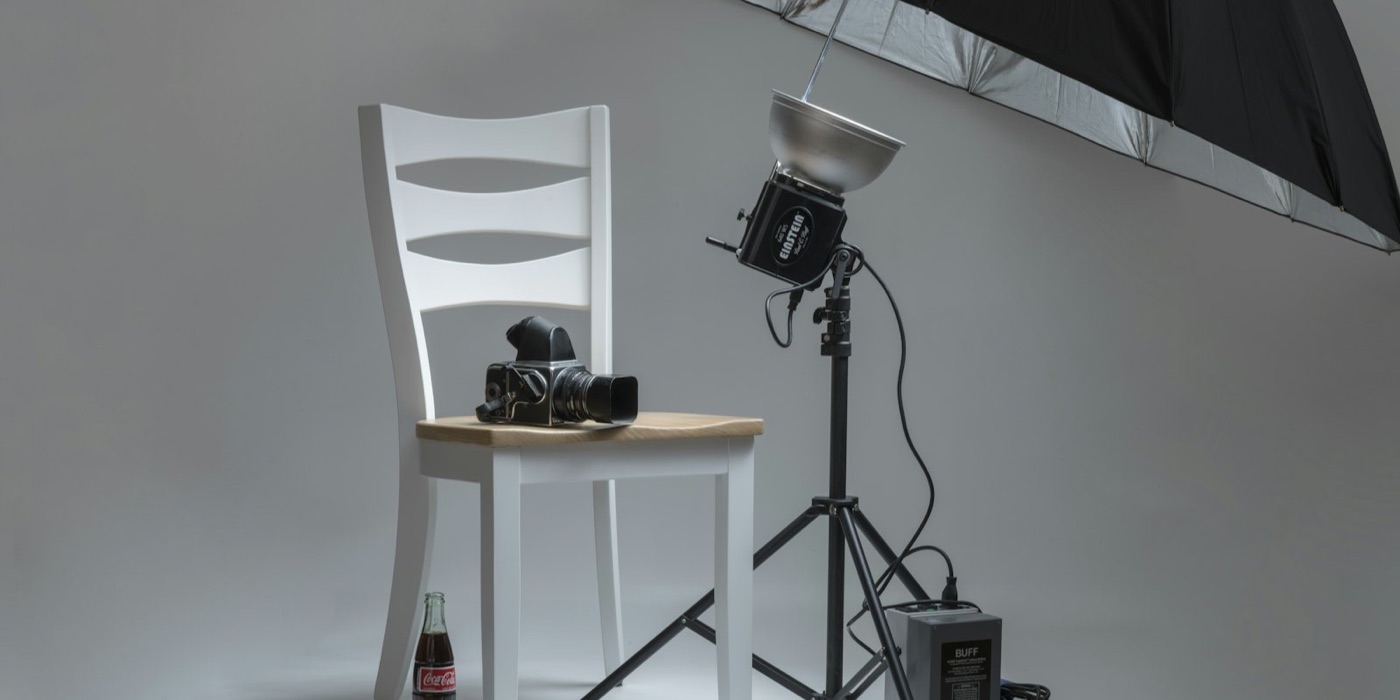
The three ways studios price the same work
Almost every quote you receive will be built on one of three models. Knowing which one you are being sold makes quotes comparable. The figures below are the ranges US studios and ecommerce photography services were publishing in 2026 — cross-checked across several that quote openly rather than on request.
| Model | Typical US range | What it usually covers |
|---|---|---|
| Per finished image | $25 – $150 | One retouched, platform-ready file. The lower end applies to volume catalogue work; the upper end to styled or lifestyle shots. |
| Per product | $75 – $200 | Several angles of one item, basic editing, background removal, and usually one round of revisions. |
| Per hour or per day | $150 – $400 / hour $1,000 – $3,000 / day |
Studio time, the photographer, and setup. Retouching is often billed separately. |
Packaged rates sit on top of these. A common shape is around $975 for five images or $1,450 for ten, with anything beyond the package billed individually — sometimes at a noticeably higher unit price than the package implied.
What actually moves the price
Two quotes for "twenty product images" can differ by a factor of four. These are the variables doing the work:
Pushes cost up
- Reflective or transparent products — glass, chrome, jewellery. They are genuinely harder to light.
- Lifestyle and styled sets rather than catalogue shots
- Models, including hand models
- Custom props, backgrounds, and set building
- On-location rather than in-studio
- Extended or exclusive licensing
- Heavy retouching and colour matching
Pulls cost down
- Ordering in volume — this is the single biggest lever
- Catalogue style on plain backgrounds
- Studio rather than location
- Accepting the studio's standard retouching
- Booking in advance rather than against a deadline
The fees that appear after the quote
- Rush delivery: commonly +50% on the image price.
- Reshoots: 25–50% of the original session, unless the error was clearly the studio's.
- Complex retouching: around $15 per image on top of the standard pass.
- Overtime if the shoot runs long — often at a higher hourly rate than the booked one.
- Licence extensions if you later want to use the images in paid advertising.
Ask for these in writing before signing. A studio that lists them openly is usually the one that will not surprise you.
A worked example
Say you sell candles and you are launching eight products. You want a hero shot, a detail shot, and a scale reference for each — twenty-four images.
| Line | Cost |
|---|---|
| 24 images at a mid-tier $50 per image | $1,200 |
| Complex retouching on 8 hero shots at $15 | $120 |
| Rush on half the set (+50% on 12 images) | $300 |
| Your time: briefing, shipping samples, review rounds | 1–2 days |
| Total | $1,620 and roughly three weeks |
That is a normal, fair price for good work. The question is whether every one of those twenty-four images needed to be made that way.
Where a studio still earns its fee
Three cases, and they are worth knowing before you decide how to split a budget:
- High-value goods where the buyer is paying for craft. At $400 for a pair of earrings, imagery is part of what the buyer is judging you on.
- Apparel, where fit drives returns. How a specific fabric drapes on a specific body is something only a real photograph settles.
- Campaign work, where the photograph is itself the product.
When it is worth questioning
The rest of the catalogue is a different matter. A promotional banner, a size guide, a feature callout — these are layout and information problems more than photographic ones. They need to be clear, accurate, and consistent. They rarely need a studio day.
That is the split worth drawing before you commission anything: which images need a camera pointed at the real object, and which need clear information laid out well.
What the alternative actually costs
LAZY60 takes one photo of your product and generates the rest of the set from it — hero variants, promotional banners, feature highlights, lifestyle scenes, comparison graphics, size guides.
One limit worth stating plainly, since it is ours and not a studio's: generated images are unreliable at counting. If an image has to show exactly seven items in a box, check it, or shoot that one.
The photo you start from is a phone snapshot. Not a studio shot, not a lightbox, not a white sweep. The only two things that matter are that the product is in focus and that you can see all of it. Lighting, background, angle, styling — none of it is required. Here is a real one: a pair of fishing pliers, photographed in someone's palm under an office ceiling light, and one of the eleven modules generated from it.
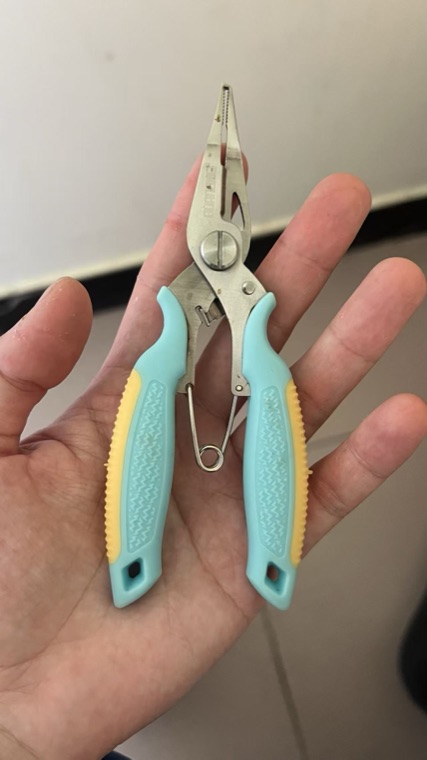
A phone snapshot — free
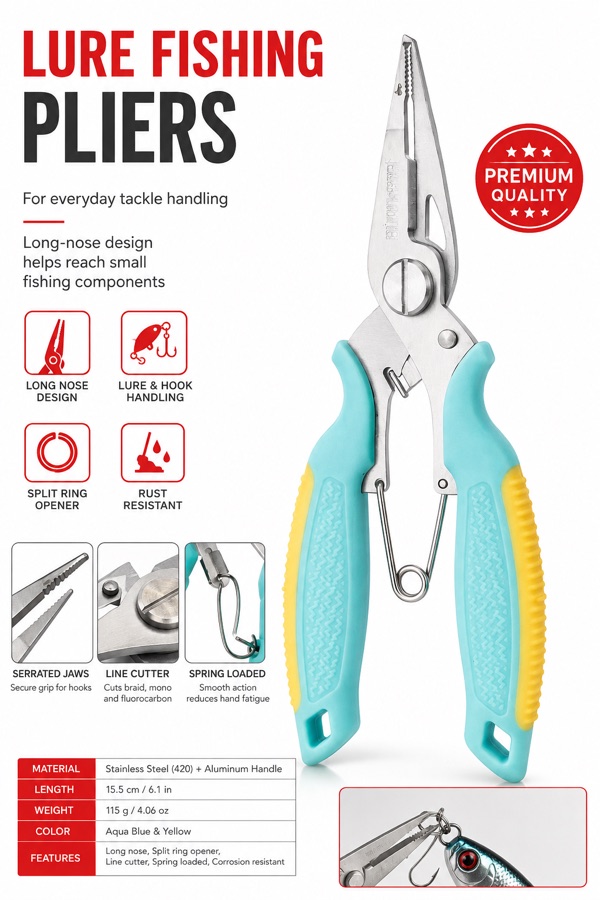
One of eleven modules — about $0.24
Output is 2K by default, which is 2048 px — the size Shopify and most marketplaces recommend for product images. See the full dimension table if you are setting a store up.
Pricing is per image, not per subscription. A 2K image is 3 points, and at current early-stage rates points run $0.080–$0.100 each depending on top-up size — so roughly $0.24 to $0.30 per image, against $25–150 from a studio.
We aim at a sixty out of a hundred: clear, accurate, compliant, good enough to publish. Not a brand campaign. For most of a catalogue, sixty is what the job actually requires.
Common questions
Is $100 an hour reasonable for a product photographer?
It is at the low end of normal. Studio rates commonly run $150–$400 per hour once equipment, lighting, and post-production are included. A $100 rate usually means either a solo photographer without studio overhead, or a quote that excludes retouching. Ask which.
How much should twenty product images cost?
At volume rates of $25–$70 per image, roughly $500–$1,400 for catalogue-style work. Styled or lifestyle images push the same order toward $1,000–$3,000. Ask whether retouching and licensing are inside that number.
Why is jewellery photography more expensive?
Reflective and transparent surfaces are genuinely difficult to light — they mirror the studio back at the camera. Expect to pay a premium for glass, chrome, gemstones, and polished metal, and expect more retouching time on top.
Can AI-generated images replace a product photoshoot?
Not the whole job. Generation tools need a photograph of the real product to work from — though a phone snapshot is enough, as long as the product is in focus and fully visible. What they replace is the second, third, and tenth image derived from it: banners, feature graphics, size guides, feature callouts. That is most of a catalogue.